

"Ask Your Butcher"
On Lost Craft

“Ask your butcher…”
Ah yes, the loquacious butchers. The generous butchers, the helpful butchers, the exploratory, the dynamic butchers…
These butchers are a figment of the British recipe writers’ imagination. Only in Britain is it necessary to “ask your butcher” for anything other than chicken breast, yet only in Britain will the response be “you what mate?”
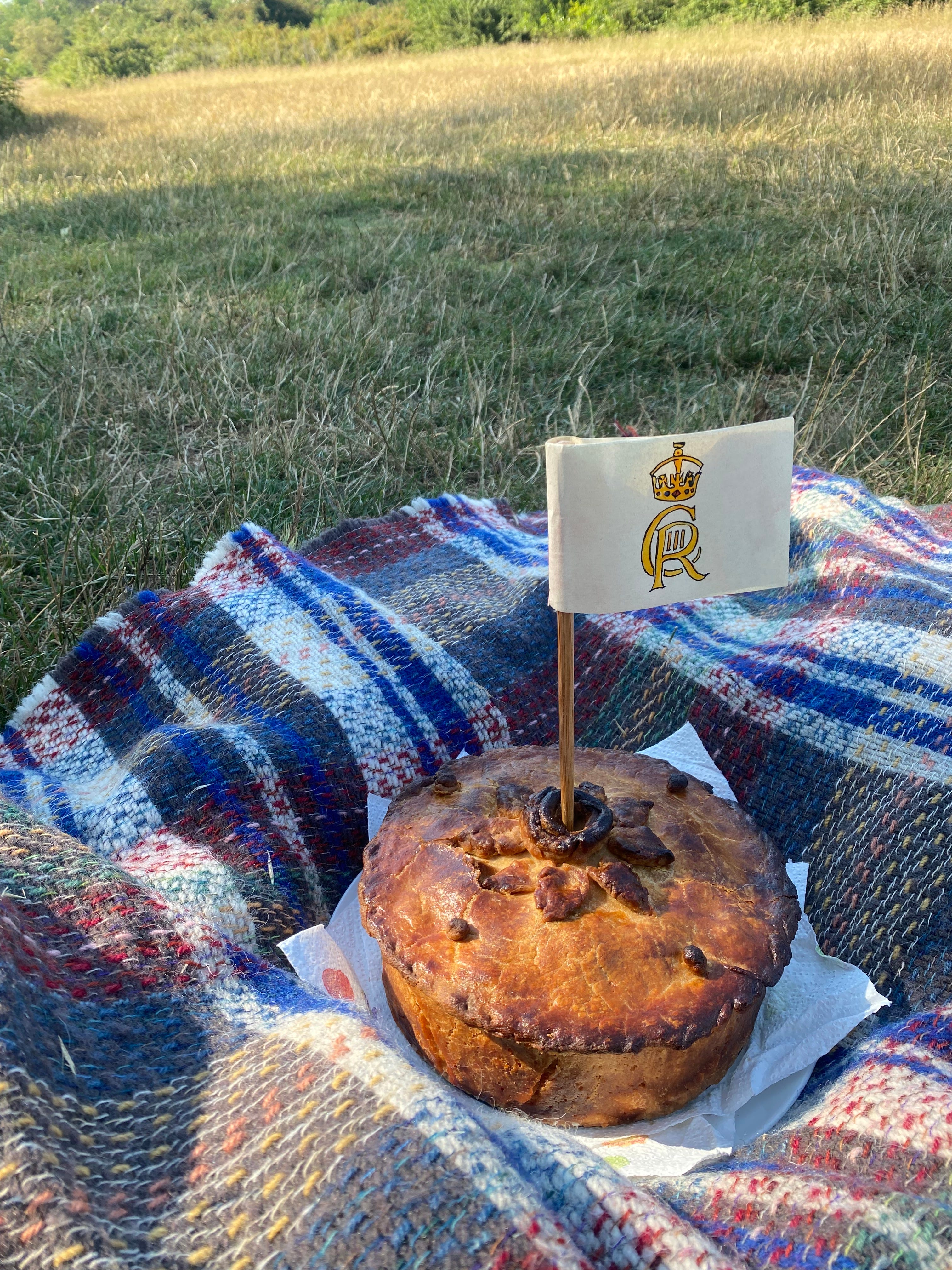
A pork pie, made with trotter jelly. In Rome. Questions were asked of the butcher, and they were answered.
Do you have any bones? “No, they get rid of them at the slaughterhouse”—use your imagination for ‘get rid’. Do you have any livers, kidneys, giblets? “No.” Trotters? “No.” In my experience butchers of the British Isles are bereft of the kinds of thing they theoretically specialise in, that is to say, edible body parts of animals that aren’t fish. Why?
For some decades now, easily all of my short lifetime, the Great British Public has a festering squeamishness about eating animals. I remember when I grew up there was a kind of libel about the ‘city folk’ (I grew up in Cornwall) not knowing that beef came from a cow, or that chicken comes from chickens. In one sense, this had to have been patronising nonsense: even if you’ve not visited an abattoir you surely know that meat comes from animals in some abstract sense. But in a deeper sense, even the folk touting this phrase about the town folk were guilty. So few of the parts of animals are understood or are eaten. How many people can describe the flavour and texture of a kidney and compare it to a liver? How few people have ever eaten tripe, were they not born before about 1970 (perhaps much earlier)?
This ‘crisis’ in meat knowledge has, again, been acknowledged for quite some time. It’s the whole reason the St John restaurant (now a small chain) came into existence, to promote “a kind of British cooking” that used ‘nose to tail’ as a route to a distinctively British authenticity. Of course, nose to tail is not remotely unique to Britain, but the historical ways of using those noses and tails were, once upon a time, distinctive.
The St John phenomenon, founded in 1994, is partly successful. Today, St John is on the map and those in the know about ‘British food’ understand it as a kind of benchmark of what is possible with pork. A while after St John’s opening, in 2003, Jonathan Meades broadcast a series of episodes on the state of British cuisine which made largely the same points as the restaurant, albeit in his campy-dour style. The creed is all the stuff I have complained about above. It’s all about an infantilisation of our kitchens and the bowdlerisation of our recipe books.
The problem with all this is that the St John phenomenon has remained a ‘foody’ thing. Those that like food will readily agree with Meades’ precepts on food, and they will acknowledge the importance of the St John project, even if they are a vegetarian. But this whole ‘thing’ has barely dispersed into the food culture. In 2026, the food culture of Britain remains one based on import (that it does well and should absolutely continue to do) but of which the population is scared to make the introspective dive into organ meats, parsley, rock samphire, terrines, cheeses beyond cheddar, and perhaps most importantly of all, eels.
Could Elizabeth David ever have predicted a situation where the average London resident will cook a passable aubergine parmigiana but turn green at the thought of liver and onions? The point here is not that the aubergines are a mistake. Rather, the point is, why did the rise of one thing have to mean the death of another: why can’t we have both, and rather than either or?
Another predictable argument one could make here is that we are doomed to do the mediterranean stuff badly, because we haven’t got the ingredients. It is true that Dutch gas-heated greenhouse tomatoes are pretty poor. This is a half truth: it’s imperfect, but with the right cooking techniques all of this can be pretty decent. We have canning technologies and a refrigerated supply chain. These are good things; and it’s always worth remembering that buying local is not necessarily green at all. When you inhabit an island for whom watercress is most at home, and the transport of food is only really a problem when it’s on local roads, food miles are a red herring.1
No, the reason to care about all this stuff is entirely cultural: the old-school foods of the British Isles are actually good if you can ever go out of your way and cut through the social opprobrium and the incorrigible butchers to get the thing. Melton Mowbray pork pies are unrivalled; a really good pickled egg made with malt vinegar is equally peerless; the same can be said of eels cooked in basically any method. The pies can be got, the eggs are very rare, and the eels are almost unobtainable.
I have never had tripe cooked outside of Italy or France, and even the great British food historian/ experimenter Neil Buttery seems to think the task is impossible. But it cannot have been, back in the day. Tripe done well, (here in Rome at the time of writing), is exquisite. It’s partly soft and wobbly but has this sticky toothsome quality and a delicate but slightly farmy flavour.
What’s the problem with eels? I guess they are mildly phallic, but so are sausages, and aubergines (apparently). They’re greasy—like everyone’s favourite fish, salmon. Liver tastes intensely meaty, like people presumably want their meat to taste. Even brains have a light flavour and a texture akin to lemon posset. Muscle meats by contrast all taste fairly similar, it’s just as though the intensity levels of the same flavours are dialled up or down a bit. What I’m saying with this paragraph here is that these things aren’t even that scary. What’s happened over time, is that new categories of ‘normal food’ and ‘travel documentary’ food or ‘challenge food’ have invisibly emerged, under our noses. It’s an interesting process, to be sure, but a sad one.
Back to the butcher: the last hope for these manual meat merchants is to give something the supermarkets can’t get us: niche things like offal. But the collective nouse and courage to eat these things are lost, and so is the demand. So we have this strange situation of cookery books like St John telling us to ‘talk to our butcher’, butchers who ain’t interested, and a public that looks at you like you are into extreme sports if you say you like organ meat. Thirty years after the St John project, then, the lie of the land is similar. The only thing for it, to experience these lost arts, is to go and eat offal in Rome, because there is a lot of it there.
Will this change? I think it may do. Eventually the forces of globalisation will give more and more great chances to eat ‘other’ foods, which are ultimately finite. At some point, the cuisine-o-sphere will need to start being more creative than geography and start thinking historically, which has already happened with things like Tasting History with Max Miller. Equally, it may be that a ‘green’ ethic on eating, including eating meat, means that there is enough demand for ‘by-products’, or at least enough social caché for being seen to eat such by-products. Instinctively, I think this would be tokenistic, but if it gets those butchers a-talking, I’m in.
As it were.
Very interesting! Why should we continue to import food?
I can offer you kidneys in red wine sauce next time you are here!
Agree the lack of offal and bones is very sad.